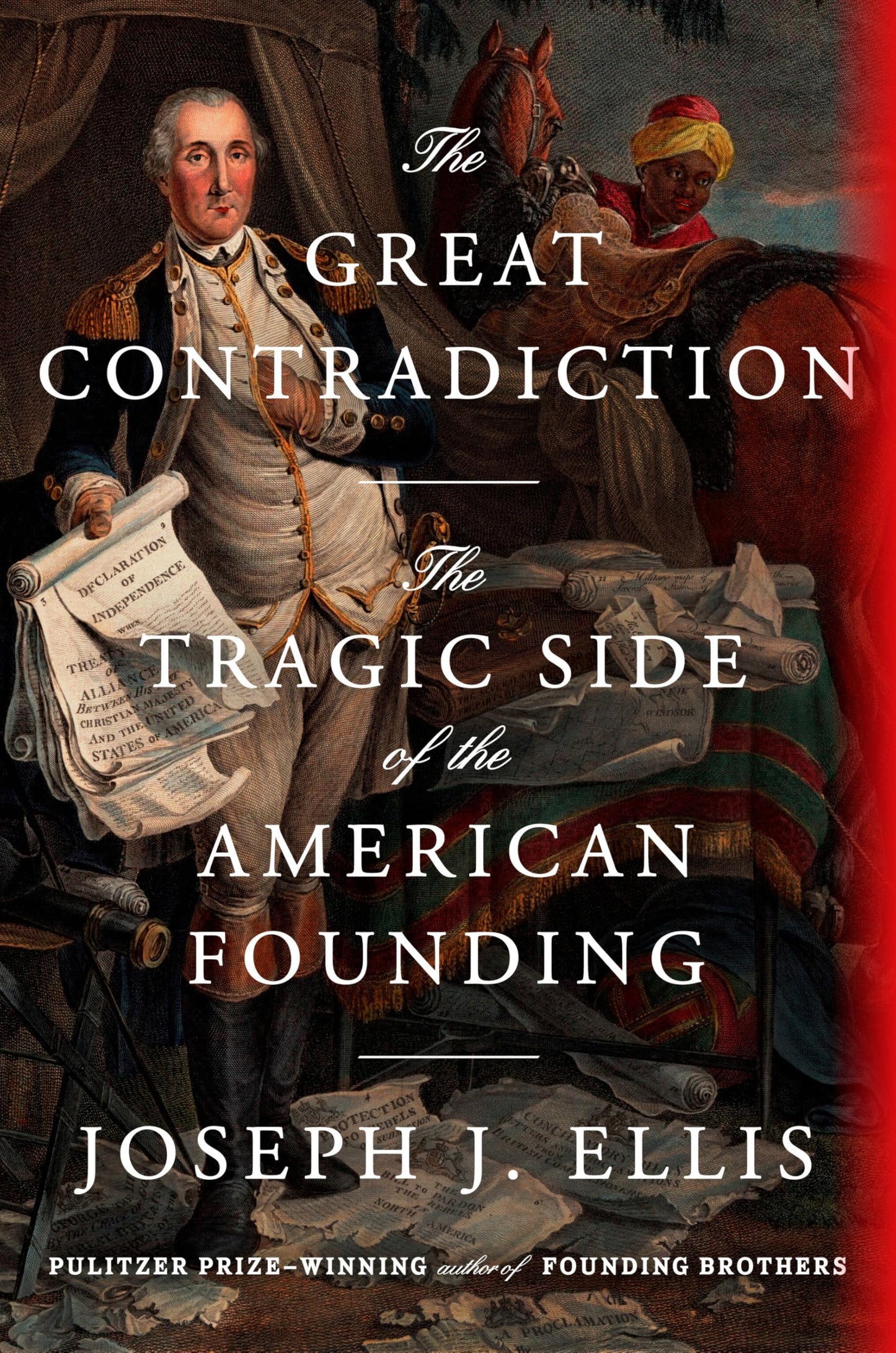
The Great Contradiction: The Tragic Side of the American Founding
Couldn't load pickup availability
Worldwide Delivery
15 Days Easy Return
Secure Payment
Share

Collapsible content
Product Description
A major new history from our most trusted voice on the Revolutionary era, the author of the Pulitzer Prize–winning Founding Brothers and the National Book Award winner American Sphinx, and featured in THE AMERICAN REVOLUTION, a film by Ken Burns, Sarah Botstein, and David Schmidt, on PBS. An astounding look at how America’s founders—Washington, Jefferson, Franklin, Madison, Adams—regarded the issue of slavery as they drafted the Declaration of Independence and the Constitution. A daring and important work that ultimately reckons with the two great failures of America’s founding: the failure to end slavery and the failure to avoid Indian removal. On the eve of the American Revolution, half a million enslaved African Americans were embedded in the North American population. The slave trade was flourishing, even as the thirteen colonies armed themselves to defend against the idea of being governed without consent. This paradox gave birth to what one of our most admired historians, Joseph J. Ellis, calls the “great contradiction”: How could a government that had been justified and founded on the principles articulated in the Declaration of Independence institutionalize slavery? How could it permit a tidal wave of western migration by settlers who understood the phrase “pursuit of happiness” to mean the pursuit of Indian lands? With narrative grace and a flair for irony and paradox, Ellis addresses the questions that lie at America’s twisted roots—questions that turned even the sharpest minds of the Revolutionary generation into mental contortionists. He discusses the first debates around slavery and the treatment of Native Americans, from the Constitutional Convention to the Treaty of New York, revealing the thinking and rationalizations behind Jay, Hamilton, and Madison’s revisions of the Articles of Confederation, and highlights the key role of figures like Quaker abolitionist Anthony Benezet and Creek chief Alexander McGillivray. Ellis writes with candor and deftness, his clarion voice rising above presentist historians and partisans who are eager to make the founders into trophies in the ongoing culture wars. Instead, Ellis tells a story that is rooted in the coexistence of grandeur and failure, brilliance and blindness, grace and sin.
Shipping & Returns
• 15-day returns — Refunds & Returns
• Shipping info — Shipping Policy
Collections
-
Wall Mirrors – Functional & Decorative Designs
Upgrade your interiors with wall mirrors that combine functionality with modern design....
-
Pendulum Wall Clocks – Classic Motion & Timeless Design
Add a traditional touch to your space with pendulum wall clocks that...
-
Digital Clocks – Modern Time Displays for Everyday Use
Keep track of time with digital clocks designed for clarity and convenience....
-
Wall Art – Modern Décor for Every Space
Enhance your space with thoughtfully designed wall art that adds character, depth,...
-
Wall Lighting
Explore wall lighting solutions designed to enhance your interiors. From ambient LED...
-
Antique & Vintage Clocks
This collection features antique-inspired and vintage-style clocks designed to reflect classic craftsmanship...