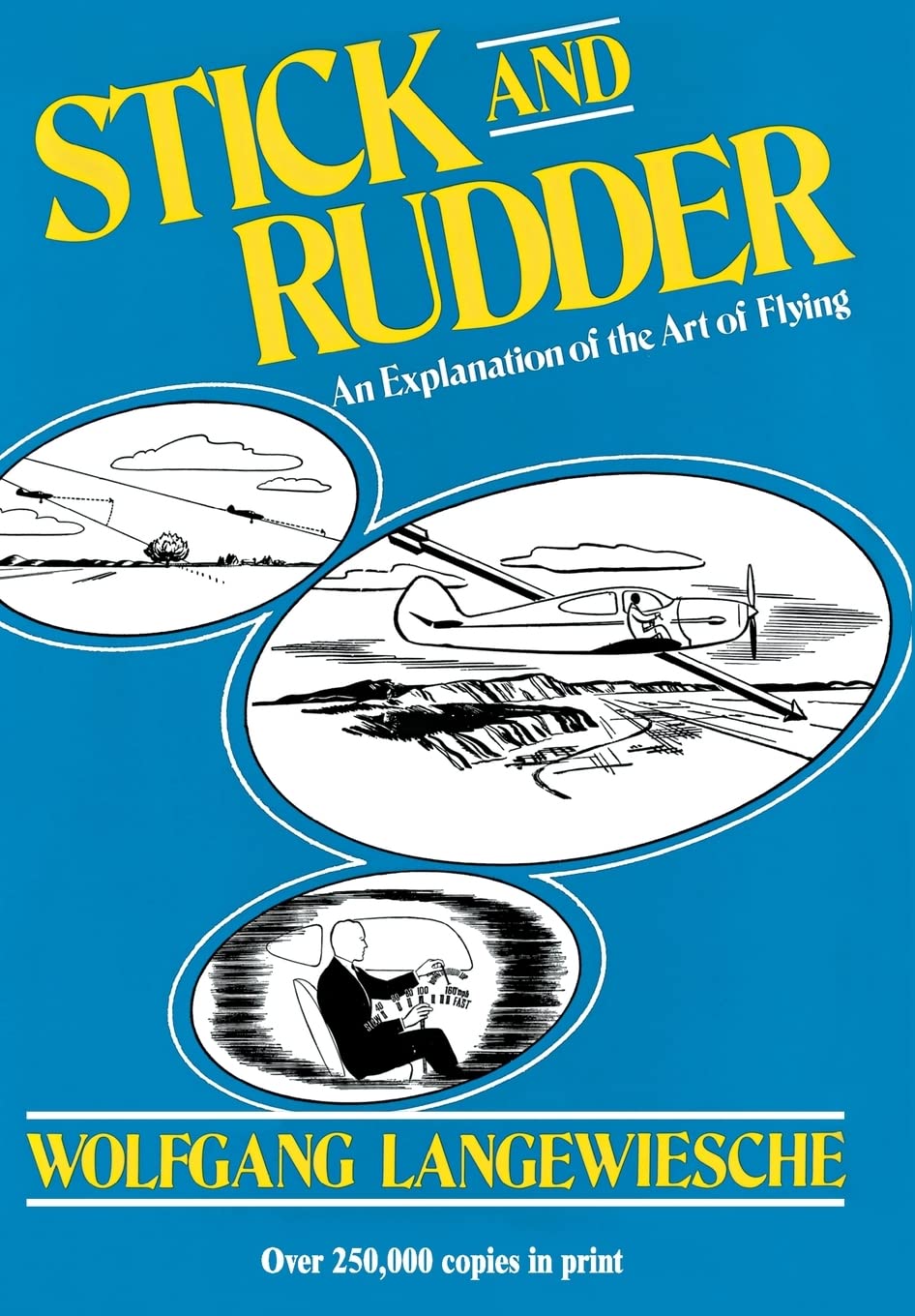
Stick and Rudder: An Explanation of the Art of Flying
Couldn't load pickup availability
Worldwide Delivery
15 Days Easy Return
Secure Payment
Share

Collapsible content
Product Description
Publisher's Note: Products purchased from Third Party sellers are not guaranteed by the publisher for quality, authenticity, or access to any online entitlements included with the product.
WHAT'S IN STICK AND RUDDER: The invisible secret of all heavier-than-air flight: the Angle of Attack—what it is and why it can't be seen. How lift is made, and what the pilot has to do with it. Why airplanes stall, and how to know you're about to stall.
The landing approach: How the pilot's eye functions in judging the approach. The visual clues by which an experienced pilot unconsciously judges—and how you can quickly learn to use them. "The Spot that does not move"—a foolproof method of making a landing approach across pole lines and trees.
The elevator and the throttle: One controls speed, the other controls climb and descent. Which is which? The paradox of the glide—by pointing the nose down less steeply, you descend more steeply; by pointing the nose down more steeply, you can glide further.
What's the rudder for? The rudder does NOT turn the airplane like a boat's rudder turns a boat. Then what does it do?
How a turn is flown: The role of ailerons, rudder, and elevator in making a turn.
The landing: The visual clues that tell you where the ground is. The "tail-dragger" landing gear and what's tricky about it—the only analysis available for those who want to fly one. The tricycle landing gear and what's so good about it—a strong advocacy written when almost all civil airplanes were taildraggers.
Why the airplane doesn't feel the wind. Why it usually flies a little sideways.
Plus: A chapter on Air Accidents by Leighton Collins, founder and editor of AIR FACTS. His analyses have influenced pilots and engineers, contributing to the safe characteristics of modern aircraft.
Stick and Rudder is the first exact analysis of the art of flying ever attempted. In print for over thirty-three years, it shows precisely what the pilot does, how he does it, and why. Applicable to large and small airplanes alike, it’s invaluable to learners, accomplished pilots, and instructors. Once controversial, its principles are now widely accepted—pilots and flight instructors know that the book works.
Today, several manuals provide accurate technical data, but Stick and Rudder remains the leading “think-book” on the art of flying. One thorough reading equals many hours of practice.
Shipping & Returns
• 15-day returns — Refunds & Returns
• Shipping info — Shipping Policy
Collections
-
Wall Mirrors – Functional & Decorative Designs
Upgrade your interiors with wall mirrors that combine functionality with modern design....
-
Pendulum Wall Clocks – Classic Motion & Timeless Design
Add a traditional touch to your space with pendulum wall clocks that...
-
Digital Clocks – Modern Time Displays for Everyday Use
Keep track of time with digital clocks designed for clarity and convenience....
-
Wall Art – Modern Décor for Every Space
Enhance your space with thoughtfully designed wall art that adds character, depth,...
-
Wall Lighting
Explore wall lighting solutions designed to enhance your interiors. From ambient LED...
-
Antique & Vintage Clocks
This collection features antique-inspired and vintage-style clocks designed to reflect classic craftsmanship...